Where Have All the Sintering Engineers Gone? Inside America's Deepening Process Talent Crisis
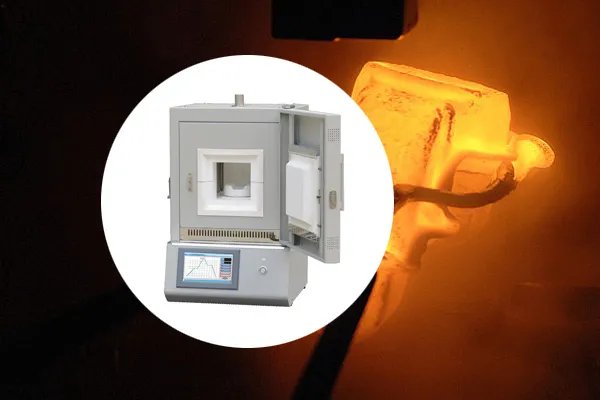
Photo: manufacturing engineer examining industrial sintering furnace in factory, via www.zylabsolution.com
Walk the floor of almost any powder metallurgy or advanced ceramics facility in the Midwest or Southeast, and you will hear the same complaint from plant managers and production directors: finding a qualified sintering process engineer has become one of the hardest hiring challenges in modern manufacturing. Not the hardest — that distinction often goes to CNC programmers or robotics technicians — but uniquely difficult because the skill set is narrow, deeply specialized, and increasingly scarce.
The numbers support the frustration. A 2023 survey conducted by the Metal Powder Industries Federation (MPIF) found that more than 60 percent of responding US manufacturers reported difficulty filling sintering-related technical roles within the previous 24 months. Of those, nearly half indicated that open positions had remained unfilled for more than six months. These are not entry-level vacancies. They are mid-career and senior process engineering roles that carry direct responsibility for dimensional tolerances, microstructural outcomes, and furnace atmosphere control — functions that cannot simply be handed to a generalist mechanical engineer and expected to succeed.
The Academic Retreat from Materials Science
To understand why this shortage exists, it is useful to trace where sintering engineers have historically come from: university materials science and engineering programs. For decades, schools like the University of Wisconsin–Madison, Penn State, and the Colorado School of Mines produced graduates with hands-on exposure to powder processing, diffusion bonding, and thermal cycle design. Those graduates fed directly into the automotive components, aerospace hardware, and electronic substrate sectors that drove domestic sintering demand throughout the 1980s and 1990s.
Something shifted in the early 2000s. As semiconductor and software industries began commanding premium salaries and cultural prestige, many materials science departments quietly repositioned their curricula toward thin films, nanomaterials, and semiconductor fabrication. Sintering, press-and-sinter tooling design, and furnace atmosphere chemistry — the bread-and-butter competencies of industrial powder processing — were reduced to single elective courses or dropped altogether from undergraduate sequences.
Dr. Renata Howell, a curriculum coordinator at a Midwestern state university who asked that her institution not be identified, described the dynamic plainly: "When we surveyed our own graduates five years after commencement, fewer than eight percent had any professional exposure to bulk powder sintering. The coursework simply wasn't there to create that exposure."
The result is a generation of materials engineers who are highly competent in surface science and additive manufacturing feedstock characterization but who have never designed a sintering cycle, never interpreted a dilatometry curve, and have no intuitive understanding of how green density variations propagate through a continuous belt furnace.
The Retirement Wave No One Planned For
Compounding the academic retreat is a demographic reality that manufacturers are only now confronting directly. The senior sintering engineers who built their expertise during the American automotive boom of the 1990s are now in their late 50s and early 60s. Many are retiring or reducing hours, and they are taking with them decades of tacit process knowledge that was never formally documented.
A hiring manager at a Tier 1 automotive components supplier in Ohio — speaking on background — described losing three senior process engineers in an 18-month window to retirement. "Between the three of them, they had 87 years of combined sintering experience," she said. "We had no succession plan. We thought we had more time."
This is not an isolated story. Across the powder metallurgy, technical ceramics, and hard metals industries, companies are discovering that informal knowledge transfer — the apprenticeship-style mentoring that once happened naturally on the shop floor — has been disrupted by lean staffing models, remote work arrangements, and an overall acceleration in production schedules that leaves little room for structured knowledge handoffs.
What Companies Are Doing Right Now
Some manufacturers are responding with creative urgency. A handful of larger firms have established internal sintering academies — structured, multi-week programs that combine classroom instruction with supervised furnace operation. These programs draw from retired engineers as paid consultants and from community college instructors who have maintained industrial partnerships.
Others are turning to apprenticeship frameworks supported by the US Department of Labor's Registered Apprenticeship program. At least three powder metallurgy companies in Pennsylvania and Michigan have filed new apprenticeship standards specifically for sintering process technicians over the past two years, a category that did not previously exist within the registered apprenticeship system. Early results are promising: completion rates are high, and participants who complete the programs are demonstrating competency levels that would previously have required four to six years of unstructured on-the-job learning.
Community colleges are also beginning to respond. Institutions in the greater Detroit area and in the Research Triangle of North Carolina have introduced powder processing modules into their advanced manufacturing technology certificates, often developed in direct partnership with local employers who supply equipment, materials, and guest instructors.
Recommendations for Closing the Gap
The problem is real and the timeline is not forgiving, but it is not yet irreversible. Based on conversations with hiring managers, academic advisors, and workforce development professionals across the industry, several practical strategies emerge.
Invest in community college partnerships now. Four-year universities are slow to restructure curricula. Two-year technical colleges are far more agile, and many are actively seeking industry partners who will co-develop content, donate furnace equipment, and provide adjunct instructors. A company that commits to this relationship today will begin seeing qualified candidates within 18 to 24 months.
Formalize internal knowledge capture before it walks out the door. Every organization with senior sintering engineers should have a structured documentation initiative underway. Video-recorded process walkthroughs, annotated furnace logs, and written troubleshooting guides are imperfect substitutes for direct mentorship, but they are vastly better than nothing.
Engage with MPIF and ASM International's workforce initiatives. Both organizations have active programs connecting employers with academic institutions and offering subsidized training resources. Companies that are not yet participating are leaving leverage on the table.
Reconsider compensation benchmarking. In many companies, sintering process engineers are classified and compensated at the same level as general manufacturing engineers. Given the specialized nature of the role and the current supply-demand imbalance, that classification is increasingly inaccurate and counterproductive for retention.
The sintering skills gap is not a crisis that arrived without warning. It has been building for more than a decade through the convergence of academic disinvestment, demographic attrition, and industry complacency. The manufacturers who act decisively now — forging academic partnerships, formalizing training pathways, and competing aggressively for the specialists who remain in the workforce — will be far better positioned than those who wait for the market to correct itself. It will not.