Building From Zero: How Sintering Startups Are Competing Without a Legacy Furnace in Sight
The Old Rules No Longer Apply
For most of the twentieth century, entering the sintered parts business meant committing to a substantial fixed-cost infrastructure: continuous belt furnaces, compaction presses, powder handling systems, atmosphere generation equipment, and the specialized workforce to operate all of it. The barriers to entry were high by design. Capital requirements alone were sufficient to limit competition to established players with deep balance sheets and long customer relationships.
That model is under pressure. A combination of modular furnace technology, the maturation of contract sintering as a legitimate business category, and the increasing availability of outsourced powder processing has lowered the threshold for market entry in ways that would have seemed implausible a decade ago. Startups and small manufacturers are now building sintering-capable businesses without owning a single production furnace—and some are doing it profitably.
Understanding how these companies operate, where their advantages are real, and where their vulnerabilities are underappreciated is relevant not only to new entrants but to established manufacturers who will increasingly compete against them.
The Modular Equipment Advantage
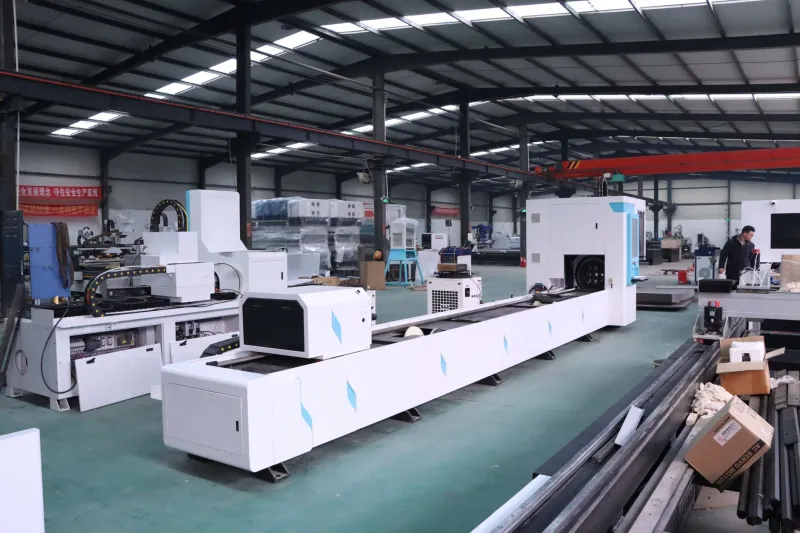
Batch furnaces and small-footprint continuous systems have improved substantially in capability and cost-effectiveness over the past several years. For a startup focused on a specific material family or part geometry, a modular batch system can provide adequate throughput at a fraction of the capital cost of a full continuous line. Leasing arrangements and equipment financing options that were not widely available to small manufacturers a decade ago have further reduced the upfront commitment required.
The tradeoff is real but manageable for the right business model. Batch systems impose throughput constraints that become significant as order volumes grow. They also require careful attention to loading configurations and atmosphere management to achieve the consistency that continuous furnaces provide more naturally. Startups operating batch equipment need to be deliberate about process development from the outset, because the margin for error narrows quickly once customer qualification is in play.
Several equipment manufacturers have responded to this market segment by offering application support and process development assistance as part of their sales relationship—a departure from the traditional model in which process knowledge was assumed to reside with the buyer. For startups without deep in-house expertise, this support can be genuinely valuable, though it should not be mistaken for a substitute for building internal capability over time.
Contract Sintering as a Strategic Tool
Perhaps the most significant structural change enabling new entrants is the growth of contract sintering as a standalone service. A number of established powder metallurgy operations across the United States now offer sintering capacity to outside customers, processing green compacts produced elsewhere and returning finished or near-finished sintered parts.
For a startup, this arrangement eliminates the largest single capital requirement in the sintering value chain while preserving the ability to control upstream processes—powder selection, compaction, and part design—where differentiation is often built. A company with a proprietary alloy blend or a distinctive compaction approach can bring those advantages to market without waiting to amortize a furnace investment.
The risks embedded in this model deserve honest examination. Contract sintering relationships introduce a dependency that can become a competitive liability. Lead times are subject to the contract processor's scheduling priorities. Capacity may be unavailable during peak demand periods. Proprietary process details must be shared with a third party, raising legitimate intellectual property concerns for companies whose competitive position depends on process secrecy.
Startups that use contract sintering effectively tend to treat it as a transitional arrangement rather than a permanent strategy. They use the period of outsourced processing to accumulate cash, develop customer relationships, and build the internal knowledge base that will eventually support bringing sintering in-house. Those that treat contract sintering as a permanent operating model often find that their cost structure and flexibility deteriorate as volume grows.
Outsourced Processing and the Distributed Supply Chain
Beyond sintering itself, new entrants are assembling distributed supply chains that outsource powder blending, secondary operations, and quality inspection to specialized third parties. This approach allows a small team to offer a broader capability set than its headcount would suggest, while keeping fixed costs low enough to survive the early years of customer development.
The practical challenge is coordination. Managing a distributed powder metallurgy supply chain requires clear specifications, rigorous incoming inspection protocols, and supplier relationships built on more than price. A startup that cannot evaluate the quality of powder it receives, or that lacks the technical depth to detect a sintering defect introduced by a contract processor, is accumulating risk that may not surface until a customer qualification audit or a field failure event.
This is where the talent question becomes critical. Emerging manufacturers that have invested in even one or two experienced sintering engineers or technologists are meaningfully better positioned than those that have relied entirely on outsourced expertise. The ability to evaluate supplier output, interpret a sintered microstructure, and make informed process decisions is not a commodity—and it cannot be fully contracted away.
Competing on Agility, Not Scale
The startups gaining traction in today's powder metallurgy market are generally not attempting to compete with established players on volume or price. They are competing on speed, customization, and willingness to develop applications that larger operations find commercially unattractive. Short-run specialty parts, rapid prototyping of sintered components for product development programs, and niche material systems that fall outside standard catalog offerings are all areas where new entrants have found room to operate.
This is a coherent strategy, but it has a ceiling. Customers who engage a startup for prototype or low-volume work will eventually evaluate whether that supplier can scale with their needs. The companies that are building durable businesses are those that are using early agility to develop the process knowledge and customer trust that will support a more conventional capital investment over time.
The sintering industry is not being disrupted by startups in the way that some manufacturing sectors have experienced. The physics of sintering still reward experience, process stability, and equipment quality. What is changing is the sequence in which new entrants acquire those advantages—and that shift is worth watching closely.