Powder, Precision, and National Security: How the Pentagon Is Rethinking Its Dependence on Sintered Materials
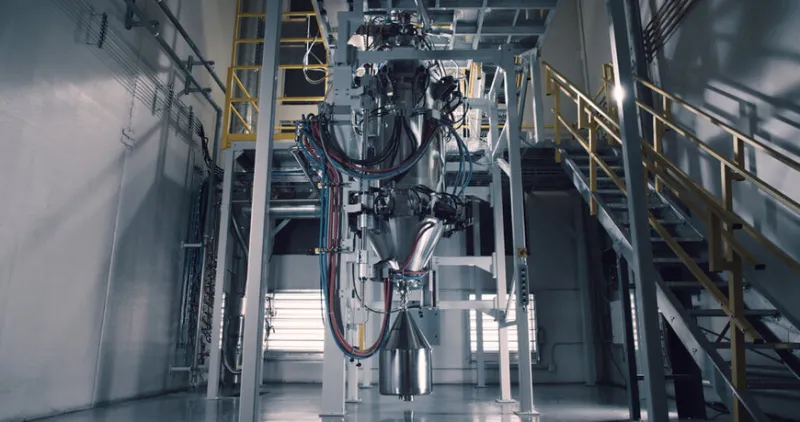
Photo: defense manufacturing tungsten powder metallurgy military industrial facility, via cdn.induportals-media-publishing.org
The components that enable modern American military capability are, in many cases, built from powder. Pressed, compacted, and thermally processed through sintering operations that most defense procurement officers would struggle to describe in technical detail, these parts are embedded throughout weapons systems, munitions, propulsion assemblies, and electronic warfare platforms. They are also, increasingly, a source of strategic concern.
The Department of Defense has spent the better part of the last decade cataloging vulnerabilities in its defense industrial base — a process accelerated by supply chain disruptions, geopolitical friction with China, and a growing recognition that advanced manufacturing capability is itself a form of national security infrastructure. Within that broader reckoning, powder metallurgy and sintering have emerged as areas warranting specific attention, both for their functional criticality and for the fragility of the domestic supply chains that support them.
What the Defense Sector Actually Sinters
To understand why the Pentagon is paying closer attention to sintering, it helps to understand how pervasive sintered components have become across major defense platforms.
Kinetic energy penetrators — the long-rod projectiles used in armor-defeating ammunition — are among the most demanding sintering applications in any industrial context. Tungsten heavy alloy penetrators, which have largely replaced depleted uranium in certain munition types, are produced through liquid-phase sintering of tungsten powder with nickel and iron or cobalt binders. The resulting material combines extreme density with sufficient ductility to maintain structural integrity at hypervelocity impact. Producing these components to specification requires tight control over powder chemistry, particle morphology, sintering atmosphere, and thermal cycle — variables that interact in ways that demand deep process expertise.
Beyond munitions, sintered rare earth magnets — primarily neodymium-iron-boron (NdFeB) formulations — are critical to the guidance and actuation systems in precision munitions, unmanned aerial vehicles, and electronic warfare equipment. These magnets are produced through a powder metallurgy route that involves jet milling of alloy ingots, pressing in a magnetic field to align crystal orientation, and sintering under vacuum or inert atmosphere. The magnetic performance of the finished part depends directly on the sintering process achieving the correct microstructural texture.
Sintered tungsten is also used in radiation shielding for nuclear applications and in shaped charge liners for anti-armor warheads. Sintered silicon carbide and aluminum oxide ceramics appear in vehicle and body armor systems. Powder metal structural components are found in aircraft actuators, rotary weapons mechanisms, and submarine valve assemblies. The breadth of application is not widely appreciated outside the technical community — but it is extensive.
The Foreign Powder Problem
The strategic vulnerability in this landscape centers on raw material sourcing. The United States does not produce rare earth elements at scale domestically, and the global supply chain for processed rare earth powders — particularly the separated and alloyed forms required for magnet production — is heavily concentrated in China. Estimates from various industrial and government sources have consistently placed China's share of global rare earth processing capacity above 80 percent, a figure that has remained stubbornly elevated despite years of policy attention.
For NdFeB magnet production specifically, the dependency extends beyond the raw ore to the processed magnetic powder itself. Several US defense contractors have historically sourced sintered magnet assemblies or the precursor powders from Chinese suppliers, not because domestic alternatives were unavailable in principle, but because the cost differential and supply reliability of Chinese sources made domestic sourcing economically unattractive in a peacetime procurement environment.
That calculus is changing. The National Defense Authorization Acts of recent years have included provisions restricting the use of magnets from certain foreign entities in defense applications, with compliance timelines that are placing real pressure on prime contractors and their tier-two and tier-three suppliers to establish or expand domestic sintering capability.
Tungsten presents a parallel vulnerability. While the United States has domestic tungsten reserves, the processing infrastructure required to convert ore into the high-purity, controlled-morphology powders suitable for sintered penetrator production is limited. China controls a dominant share of global tungsten production and processing, and the specialty powder grades required for defense applications are not interchangeable commodities.
DoD Initiatives and Industrial Policy Responses
The Department of Defense has engaged these vulnerabilities through several overlapping mechanisms. The Defense Production Act Title III program has been used to fund domestic capacity investments in specialty metal powders, including funding directed at rare earth processing and tungsten supply chain development. The Industrial Base Analysis and Sustainment (IBAS) program has conducted assessments of sintering and powder metallurgy capacity within the defense industrial base, identifying single-source dependencies and capability gaps.
The Manufacturing USA network — specifically institutes such as America Makes and the Advanced Robotics for Manufacturing (ARM) Institute — has supported applied research relevant to sintering process development, though the direct defense sintering focus has been more pronounced in programs administered through the Office of the Under Secretary of Defense for Research and Engineering.
On the contractor side, several major defense manufacturers have begun internalizing sintering capabilities that were previously outsourced. The rationale is both strategic and practical: bringing sintering in-house reduces exposure to supply chain disruption, enables tighter process control over components with classified performance specifications, and positions the organization to respond to DoD supplier qualification requirements without dependence on external vendors.
Smaller specialty manufacturers — particularly those in the tungsten heavy alloy and advanced ceramics space — have seen increased interest from defense prime contractors seeking to qualify domestic second sources for previously single-sourced sintered components. The qualification process is time-consuming and technically demanding, but the policy environment is creating financial incentives that did not exist five years ago.
Process Capability as a Security Asset
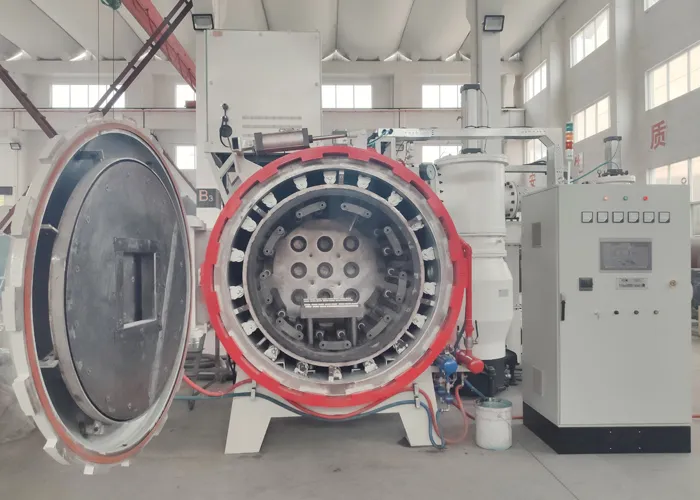
One dimension of this conversation that receives insufficient attention in policy discussions is the role of process expertise — not just equipment and material — in defense sintering capability. A furnace is procurable. The knowledge required to operate it reliably for defense-grade components is not.
Sintering tungsten heavy alloy penetrators to specification requires process engineers who understand the interaction between powder lot characteristics, compact density, sintering atmosphere composition, temperature profile, and cooling rate. Getting that interaction wrong produces parts that fail ballistic performance tests — or worse, parts that appear to meet specification but carry internal microstructural defects that compromise performance in field conditions.
The domestic workforce challenge in sintering — documented elsewhere in SinterCom's coverage — intersects directly with the defense supply chain problem. If the United States is to rebuild domestic sintering capacity in strategically critical material systems, it requires not only capital investment in furnaces and powder processing equipment, but sustained investment in the engineering and technical workforce that can operate those systems to defense performance standards.
Looking Forward
The trajectory of DoD policy, reshoring incentives, and supply chain risk management suggests that sintering will occupy a more prominent position in defense industrial base planning over the coming decade. The combination of near-peer competitor concentration in critical powder supply chains and the functional indispensability of sintered components across modern weapons systems creates a policy imperative that is difficult to defer.
For sintering professionals working in or adjacent to the defense sector, this environment represents both an obligation and an opportunity. The technical standards are demanding, the qualification requirements are rigorous, and the consequences of process failure are not measured in scrap rates alone. But the institutional recognition that sintering capability is a national security asset — not merely a manufacturing detail — is a meaningful shift in how this discipline is valued at the highest levels of defense procurement.
The powder that goes into these components is small. The strategic stakes surrounding it are not.