Two-Year Degrees, Real-World Results: How Community Colleges Are Rebuilding the Sintering Talent Pipeline
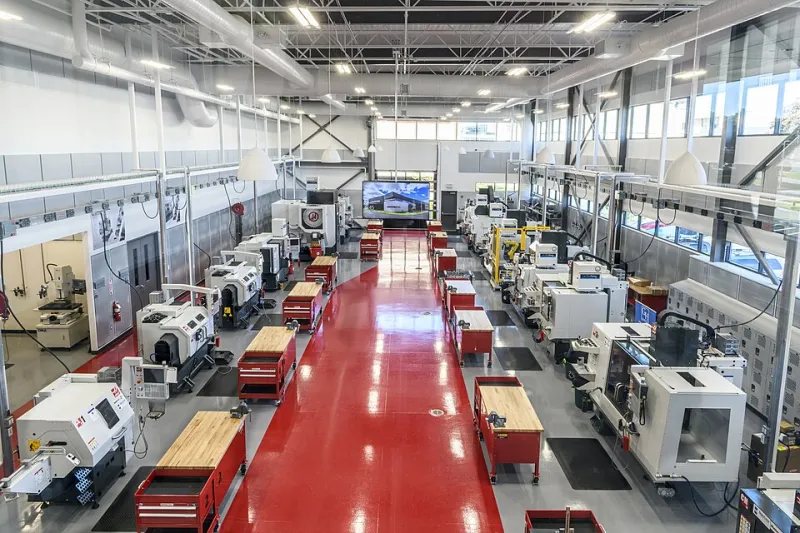
Photo: Zippylips, CC BY-SA 4.0, via Wikimedia Commons
A Shortage That Credentials Alone Cannot Fix
The sintering industry's workforce problem is not simply a matter of finding candidates with the right diplomas. It is a structural mismatch between the type of training the sector requires and the institutions historically tasked with providing it. Four-year metallurgical and materials science engineering programs, when they exist at all, tend to concentrate on theoretical foundations and research applications. The hands-on, process-intensive knowledge that a sintering production floor demands — atmosphere control, furnace profiling, green compact handling, dimensional tolerance management — rarely appears in a standard undergraduate curriculum.
The result is a generation of graduates who understand the thermodynamics of solid-state diffusion but have never calibrated a mesh belt furnace or diagnosed a carbon potential deviation in real time. Meanwhile, experienced technicians who built their expertise over decades of shop-floor practice are retiring at a rate the industry has not yet found a systematic way to counter.
Into this gap, a growing number of community colleges and technical institutes across the United States are stepping with programs that are pragmatic, employer-informed, and — perhaps most importantly — accessible to students who cannot commit four years and six-figure tuition costs to entering a manufacturing career.
Partnership Models That Are Producing Results
In the upper Midwest, where powder metallurgy manufacturing remains a significant industrial presence, several regional community colleges have formalized partnership agreements with local sintering operations. These arrangements vary in structure but share a common logic: employers help define curriculum content, donate or loan equipment, offer facility access for lab instruction, and frequently commit to interviewing graduates for open positions.
One model that has attracted attention involves a tiered approach to instruction. Students in the first year complete foundational coursework in materials science, quality systems, and manufacturing processes — content that transfers broadly across metalworking industries. In the second year, they rotate through employer partner facilities, spending structured blocks of time in sintering, compaction, and quality inspection roles. By the time students complete their associate degree, they have logged several hundred hours of supervised, process-specific experience.
This structure addresses a persistent complaint from hiring managers: that new employees require twelve to eighteen months of on-the-job development before they operate independently. Graduates of integrated programs arrive with that runway already partially traveled.
In the Southeast, a different model has taken shape around incumbent worker training. Rather than building programs designed primarily for new entrants, some technical colleges have partnered with manufacturers to create stackable credential pathways for existing production employees. A press operator who completes a focused sintering process module earns a recognized certificate and becomes eligible for advancement into process technician roles — a pipeline that retains institutional knowledge while formally expanding individual skill sets.
Curriculum Innovations Addressing Modern Process Complexity
The sintering process of 2024 is not the sintering process of 1994. Modern production environments incorporate closed-loop atmosphere monitoring, real-time dimensional measurement, statistical process control software, and increasingly, sensor-driven data acquisition that feeds into broader quality management systems. Any curriculum that prepares students only for analog process management is preparing them for a shop floor that no longer exists at the competitive end of the industry.
Forward-looking programs have responded by integrating digital literacy alongside traditional process skills. Instruction in data logging software, basic statistical analysis, and the interpretation of SPC charts now appears alongside conventional topics like powder characterization and sintering cycle design. Some programs have introduced modules on automated furnace control systems, recognizing that technicians who can interact fluently with programmable logic controllers are significantly more valuable than those who cannot.
Curriculum development in this space benefits enormously from employer advisory boards that meet regularly and communicate honestly about evolving skill requirements. The programs showing the strongest placement outcomes tend to be those where the advisory relationship is genuinely reciprocal — where faculty visit production facilities, where industry professionals deliver guest instruction, and where curriculum review happens on an annual cycle rather than once a decade.
The Economics of the Two-Year Pathway
For many prospective students, the financial calculus of a community college technical program is straightforwardly attractive. Tuition at a two-year public institution typically runs a fraction of four-year university costs, and associate degree programs can often be completed while maintaining part-time employment. For manufacturers in regions where wages for skilled technicians are competitive, the prospect of hiring a graduate with relevant credentials at a lower total compensation expectation than a degreed engineer represents genuine value — provided the program has delivered on its training commitments.
For employers who contribute to program development and equipment provision, the investment is recoverable through reduced onboarding costs and lower turnover among employees who entered the industry through a structured, employer-connected pathway. Several manufacturers who have tracked these figures report meaningful differences in two-year retention rates between hires who came through partner programs and those recruited through general postings.
Where the Model Has Limits
Honesty requires acknowledging that community college programs are not a complete solution to the industry's talent challenges. Associate-degree graduates, however well-trained, are prepared for technician and process operator roles. The pipeline for process engineers — professionals capable of designing sintering cycles for novel alloy systems, evaluating equipment capital decisions, or leading process improvement initiatives — still depends heavily on four-year and graduate-level education. Strengthening the two-year pathway does not reduce the urgency of engaging with university materials science departments to ensure sintering content remains part of their curricula.
Geographic concentration is another constraint. Community college programs draw from local populations, and their graduates tend to remain in the regions where they trained. Manufacturers in areas without nearby technical programs cannot easily access this talent stream without investing in the development of local institutional capacity — a longer-term commitment that requires organizational will and sustained engagement.
Building the Infrastructure That the Industry Needs
The community college pathway is not a stopgap. For a substantial portion of sintering operations — particularly those in high-volume press-and-sinter production, where process consistency and technical vigilance matter more than advanced materials research — two-year trained technicians represent the appropriate and sustainable workforce model. The industry's task is to take this channel seriously: to invest in it, to communicate clearly with educational partners about what the work actually requires, and to build career structures that make sintering technician roles genuinely attractive over the long term.
The talent crisis in sintering did not develop overnight, and it will not resolve quickly. But the institutions capable of producing the next generation of process professionals are already present in most manufacturing regions. Whether the industry engages them with the seriousness the moment demands is, at this point, a choice.