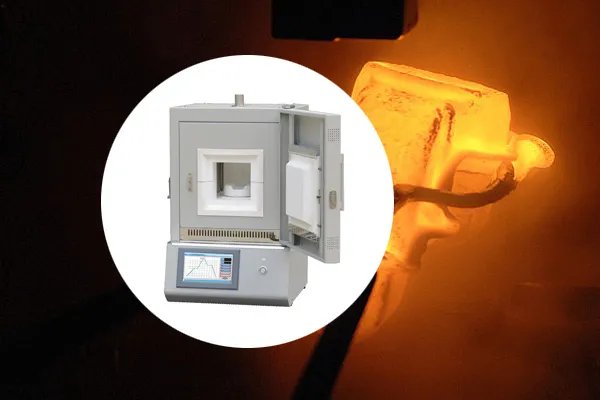
Aging Furnaces, Modern Demands: A Financial Framework for Sintering Equipment Decisions
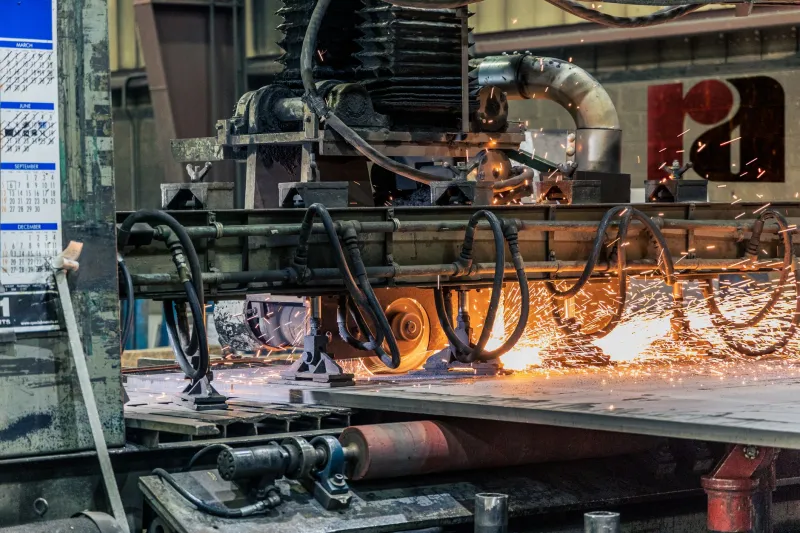
Sintering furnaces are not modest investments. A continuous mesh-belt furnace capable of production-scale throughput represents a capital commitment measured in hundreds of thousands of dollars at minimum, and high-capacity pusher or walking-beam systems for specialty applications can reach into the millions. Given that reality, it is entirely rational for plant managers to extract every productive year from installed equipment before authorizing a capital replacement request. The problem arises when rational caution shades into systematic deferral—when the decision to wait is made repeatedly, without a structured framework, until the equipment itself makes the decision by failing.
Across American sintering operations, that pattern is more common than the industry publicly acknowledges. Equipment purchased in the 1990s or early 2000s, maintained with varying degrees of rigor, is now approaching or exceeding its design service life. The question confronting plant managers, operations directors, and CFOs is not whether these assets will eventually require replacement—they will—but whether the financially and operationally sound moment to act has already arrived.
Establishing a Total Cost of Ownership Baseline
Any serious evaluation of the retrofit-versus-replace decision must begin with a rigorous total cost of ownership (TCO) analysis of the existing asset. Purchase price and book value are largely irrelevant to this calculation; what matters is the forward-looking cost of operating the equipment through a defined future horizon—typically five or ten years—under realistic maintenance and reliability assumptions.
The TCO model for an aging sintering furnace should encompass several cost categories that are frequently underweighted in informal assessments. Direct energy consumption is the most tractable: older furnaces, particularly those with refractory insulation that has degraded over years of thermal cycling, consume meaningfully more natural gas or electricity per unit of throughput than modern equivalents. A thermal audit of the furnace shell—measuring heat loss through the muffle, end curtains, and access points—will frequently reveal energy waste that translates to $50,000 or more in annual utility expenditure above what a replacement unit would require.
Maintenance and spare parts costs deserve equal scrutiny. As furnace equipment ages, the frequency and cost of unplanned maintenance events tend to follow a characteristic upward curve. Replacement parts for discontinued equipment become scarcer and more expensive; in some cases, components must be fabricated to specification at premium cost. Tracking actual maintenance expenditure over the prior three to five years, and projecting forward under the assumption that the trend continues, provides a more honest cost picture than any vendor-supplied estimate.
The cost of unplanned downtime is the most consequential and the most frequently underestimated component of the TCO analysis. A sintering furnace that goes down unexpectedly in a high-volume automotive or industrial components operation does not simply stop producing parts—it creates a cascading disruption that extends to customer delivery commitments, expediting costs, and, in the worst cases, line-stoppage penalties that can dwarf the cost of the maintenance event itself. Assigning a realistic dollar value to downtime risk, based on actual historical frequency and operational impact, is essential to a credible TCO model.
Evaluating Retrofit Options Honestly
For equipment that has not yet reached end-of-life but is showing performance degradation, targeted retrofits can extend productive service life and improve operating economics. The challenge is distinguishing retrofits that deliver genuine, durable value from those that merely defer a capital decision without improving the underlying asset's long-term trajectory.
Energy efficiency upgrades are among the most reliably positive retrofit investments. Replacing degraded muffle sections or refractory lining with modern high-temperature ceramic fiber materials can reduce heat loss substantially. Upgrading combustion control systems to modern proportional-integral-derivative (PID) controllers with oxygen trim capability can improve fuel efficiency by 10 to 20 percent on older furnaces with rudimentary control architectures. In many cases, these investments carry payback periods of two to four years and continue generating savings through the remaining service life of the equipment.
Industry 4.0 integration retrofits—adding sensor networks, historian systems, and connectivity infrastructure to legacy furnaces—present a more nuanced picture. The hardware is often straightforward to install, and the operational benefits of real-time monitoring are genuine. However, plant managers should be clear-eyed about the ceiling on what digital instrumentation can accomplish when grafted onto mechanically compromised equipment. A well-instrumented furnace with worn drive components, degraded atmosphere sealing, or inconsistent heating element performance will generate excellent data about a deteriorating process. The data does not fix the underlying problem.
The honest question to ask of any retrofit proposal is this: does this investment improve the fundamental capability of the equipment, or does it only improve visibility into its limitations?
Recognizing the Signals That Replacement Is Overdue
Certain operational indicators, when they appear in combination, suggest that the retrofit-versus-replace decision has effectively already been made by the equipment itself. Plant managers should treat the following as serious warning signs warranting an expedited capital review.
Escalating atmosphere control instability—dew point swings, carbon potential drift, or atmosphere leakage events that are increasing in frequency despite maintenance interventions—typically reflects structural degradation of the furnace muffle or atmosphere sealing system. These are not problems that sensor upgrades or control system improvements resolve; they require either major mechanical reconstruction or replacement.
Thermal uniformity degradation, particularly in furnaces where the heating zone temperature profile has shifted over time and can no longer be corrected by zone setpoint adjustment, indicates heating element deterioration or refractory damage that is progressively worsening. In a production environment where sintering temperature uniformity directly governs dimensional and microstructural consistency, this is not a manageable condition—it is a quality liability.
Parts availability constraints are a practical forcing function that is sometimes overlooked in financial analyses. When critical spare components—burner assemblies, drive motor assemblies, control modules for discontinued systems—require extended lead times or custom fabrication, the risk profile of continued operation changes materially. A single unplanned failure in a component with a twelve-week lead time can produce a production disruption whose cost approaches or exceeds the capital cost of replacement.
Building the Capital Replacement Case
For operations leadership that has concluded, through rigorous TCO analysis, that replacement is financially justified, the challenge shifts to constructing a capital appropriation request that will survive scrutiny at the corporate or ownership level.
The most persuasive replacement cases are built on avoided cost rather than performance aspiration. Quantify the projected maintenance expenditure that replacement eliminates. Quantify the energy savings that a modern furnace delivers relative to the existing asset, using actual utility rate data and verified consumption comparisons. Quantify the downtime risk that is being retired, using historical frequency data and realistic impact estimates. Present these figures against the capital cost of the replacement unit and a realistic installation and qualification timeline.
Energy efficiency incentives available through federal programs—including manufacturing-focused provisions within recent industrial policy legislation—and utility rebate programs offered by major electric and gas utilities in manufacturing-intensive states such as Ohio, Michigan, Indiana, and Pennsylvania can meaningfully reduce net capital outlay and should be incorporated into the financial model.
Finally, frame the replacement decision in terms of the strategic trajectory of the operation. A sintering facility investing in next-generation equipment is positioning itself to serve customers with increasingly demanding process capability requirements. A facility sustaining aging equipment through successive maintenance interventions is, by definition, not making that positioning investment. In markets where customer qualification criteria are rising and competitive differentiation is increasingly tied to demonstrated process capability, that distinction has strategic weight beyond the immediate capital decision.