The Green Furnace Question: Measuring Sintering's Environmental Footprint and the Technologies Aiming to Shrink It
There is an inherent tension at the center of any conversation about sustainable sintering. The process depends fundamentally on heat — sustained, precisely controlled, high-intensity thermal energy applied to compacted powder over extended cycles. That heat has to come from somewhere, and for most of the industry's history in the United States, it has come primarily from natural gas and electricity generated by carbon-intensive grid sources. Asking whether sintering can become truly green is, in some respects, asking whether the physics of the process can be reconciled with the imperatives of a decarbonizing economy.
The honest answer, as this examination will show, is complicated. Progress is real, measurable, and accelerating in certain corners of the industry. But significant barriers remain, and the path to a meaningfully lower-carbon sintering sector requires more than incremental equipment upgrades — it demands a rethinking of energy strategy, process design, and how the industry trains the next generation of engineers to approach environmental performance.
Understanding the Current Environmental Profile
Before evaluating solutions, it is worth establishing what the problem actually looks like. Industrial sintering operations consume energy in several distinct phases: powder preparation and handling, compaction, the sintering thermal cycle itself, and post-processing operations including cooling and finishing. Of these, the thermal cycle is by far the most energy-intensive, with continuous belt furnaces and batch vacuum systems operating at temperatures ranging from 1,100°C to over 2,000°C depending on the material system.
Natural gas remains the dominant energy source for atmospheric sintering furnaces in the United States, particularly in high-volume powder metallurgy operations producing structural automotive and industrial components. The combustion of natural gas releases carbon dioxide directly, and the process atmosphere gases used in many sintering operations — hydrogen, nitrogen, and dissociated ammonia among them — carry their own production and handling carbon costs.
Beyond direct combustion emissions, sintering generates process waste in the form of spent binder materials, contaminated atmosphere gases, and metallic powder residues from die wear and handling losses. These waste streams vary considerably by operation type, but their aggregate environmental impact has received comparatively little attention relative to energy consumption.
Electrification: The Most Direct Path Forward — and Its Limits
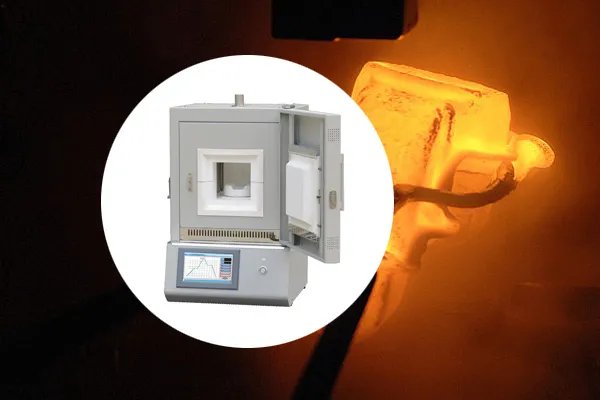
The most straightforward route to reducing sintering's carbon footprint is electrification — replacing gas-fired furnaces with electrically powered alternatives and sourcing that electricity from renewable generation. Electric resistance furnaces, induction heating systems, and microwave-assisted sintering platforms all offer the potential to decouple the thermal process from direct combustion emissions.
Electric sintering furnaces are not new technology. Vacuum furnaces used in aerospace and medical device manufacturing have long relied on electric resistance heating elements, partly for process control reasons and partly because atmosphere requirements make gas combustion impractical. What is new is the economic and regulatory pressure pushing atmospheric sintering operations — which have historically defaulted to gas — to evaluate electric alternatives more seriously.
The business case for electrification is sensitive to local electricity costs and grid carbon intensity, both of which vary substantially across U.S. regions. A manufacturer in the Pacific Northwest, drawing on hydroelectric generation at competitive rates, faces a very different calculation than one operating in a grid region still heavily dependent on coal-fired baseload generation. For the latter, electrification may reduce direct emissions while shifting the carbon burden upstream, a trade-off that requires careful analysis rather than reflexive adoption.
Spark plasma sintering and flash sintering — techniques that apply electrical current directly through the powder compact — represent a more radical departure from conventional thermal processing. These methods achieve consolidation in seconds rather than hours, with dramatically reduced energy inputs per part. Their scalability for high-volume production remains an active area of research, but several U.S. universities and national laboratories are investing in process development that could eventually bring these approaches into industrial practice.
Powder Recovery: Closing the Loop on Material Waste
Energy consumption is the most visible dimension of sintering's environmental profile, but material efficiency deserves equal attention. Metallic powders are energy-intensive to produce, and any powder that does not become a finished part represents embedded carbon that is simply discarded. In many sintering operations, powder losses occur at multiple points: die fill variability, ejection damage, handling spills, and atmospheric contamination that renders recovered powder unusable without reprocessing.
Closed-loop powder recovery systems — which capture, characterize, and reintroduce off-spec or recovered powder back into the production stream — are gaining adoption in facilities where powder cost and material sustainability are treated as linked concerns. Advances in powder characterization technology have made it more practical to assess recovered powder quality rapidly and blend it with virgin material at controlled ratios without compromising part performance.
For manufacturers working with high-value materials such as titanium, cobalt-chrome, or nickel superalloy powders, the economic incentive for recovery is substantial independent of any sustainability mandate. The environmental co-benefit is significant: reusing powder that has already been atomized and processed avoids the full energy and emissions cost of producing an equivalent quantity of new feedstock.
Waste Heat Recovery: An Underutilized Resource
Sintering furnaces reject enormous quantities of thermal energy during cooling cycles. In most facilities, this heat is simply vented to the atmosphere — a loss that represents both an economic inefficiency and an unnecessary carbon burden on the upstream energy supply. Waste heat recovery systems, which capture exhaust thermal energy and redirect it for space heating, water heating, or industrial drying applications, offer a relatively low-barrier entry point for improving overall energy efficiency.
The technology for waste heat recovery is mature and well-proven in other industrial contexts. Its adoption in sintering facilities has lagged, partly due to the capital cost of retrofitting existing infrastructure and partly because energy has historically been treated as an operating expense rather than a strategic resource. As energy prices rise and sustainability reporting requirements expand — particularly for manufacturers supplying to large corporate customers with Scope 3 emissions commitments — the calculus is shifting.
Training the Next Generation for a Greener Process
Technology alone will not drive the transition to more sustainable sintering operations. The engineers and process technicians who design, operate, and optimize these systems need to arrive with environmental performance as a core competency, not an afterthought. Currently, most sintering-related education in the United States focuses on metallurgical outcomes, process control, and equipment operation — all essential, but insufficient if sustainability is to become a genuine design criterion.
Integrating life cycle thinking, energy accounting, and materials circularity into powder metallurgy and materials science curricula would better prepare graduates to evaluate process decisions through an environmental lens. Professional development programs for working engineers represent an equally important channel: many experienced practitioners have deep process knowledge but limited exposure to energy systems analysis or carbon accounting methodologies.
The green furnace question does not have a clean answer yet. What is clear is that the industry possesses both the technical tools and the economic incentives to make meaningful progress — provided it commits to treating sustainability as an engineering problem worthy of the same rigor it applies to dimensional tolerances and mechanical properties.