Chasing Throughput at Your Own Peril: The Hidden Costs of Accelerated Sintering Cycles
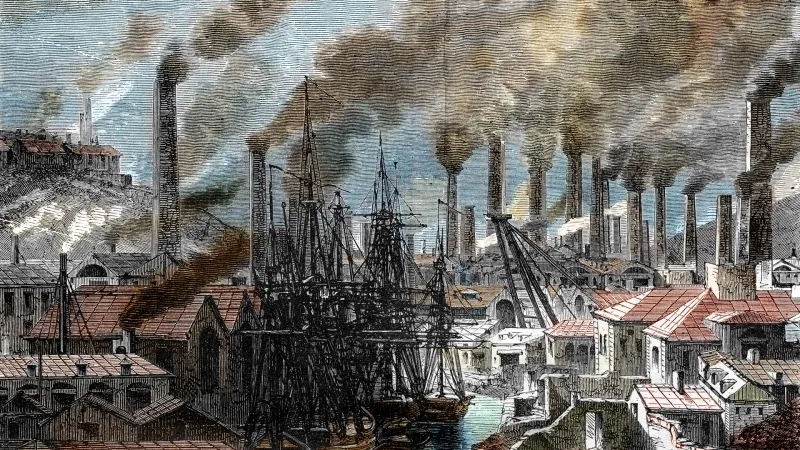
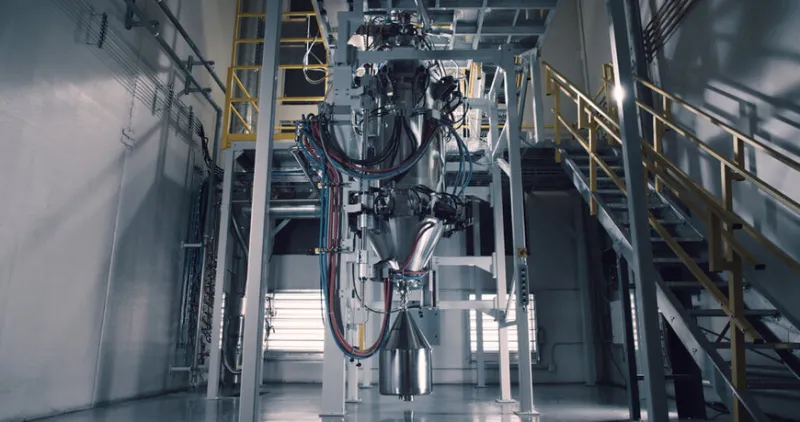
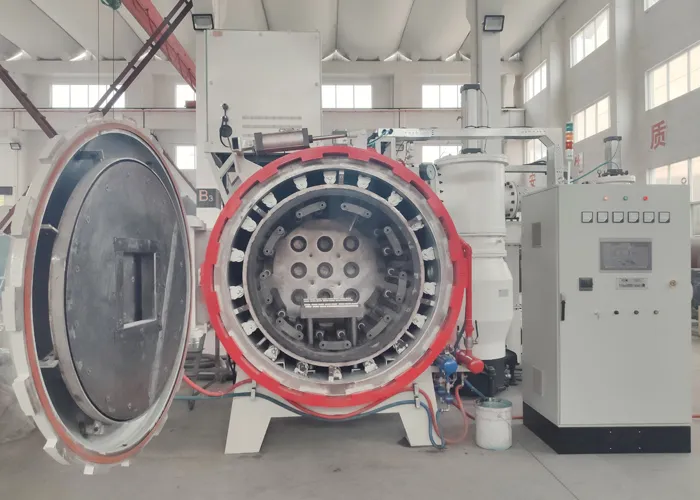
Photo: industrial sintering furnace interior glowing metal parts production line, via assets.editorial.aetnd.com
There is a persistent belief on the production floor that the fastest furnace is the most profitable furnace. Cycle time, after all, is a lever that management can pull without purchasing new equipment, hiring additional staff, or renegotiating material contracts. Shorten the sinter cycle, the logic goes, and you immediately increase unit output from the same capital footprint. It is a seductive calculation — and, in practice, one that has cost American manufacturers tens of millions of dollars in warranty claims, scrap, and reputation damage.
The sintering process is not indifferent to speed. It is governed by diffusion kinetics, grain boundary energetics, and thermodynamic equilibria that operate on their own schedule, largely unconcerned with quarterly production targets. When engineers compress those schedules, the consequences range from subtle microstructural anomalies to catastrophic mechanical failure.
What Sintering Actually Demands: A Primer on Densification Kinetics
At its core, sintering is a thermally activated process in which powder particles bond and densify through atomic diffusion. The rate at which this occurs depends on temperature, particle size distribution, atmosphere composition, and time — with time being the variable manufacturers most frequently sacrifice when throughput pressure intensifies.
During the initial heating phase, organic binders and lubricants must be completely volatilized before the part reaches densification temperatures. Rush this stage and residual carbon or moisture becomes trapped within the compact. In ferrous sintering, this commonly manifests as porosity clusters or carbide precipitation at grain boundaries — neither of which is visible to the naked eye but both of which degrade tensile strength and fatigue resistance in predictable and dangerous ways.
The isothermal hold period — the dwell at peak temperature — is where the bulk of densification and microstructural development occurs. Reducing dwell time by even fifteen to twenty percent can leave parts with final densities two to four percent below specification. For structural components, that gap is often the difference between a part that meets MPIF Standard 35 and one that does not.
Case Study: Automotive Connecting Rod Forgings and the Rework Spiral
A mid-sized Midwestern powder metallurgy supplier producing sintered steel connecting rods for a Tier 1 automotive customer provides an instructive example. Facing a delivery shortfall, the facility's process engineering team approved a temporary reduction in furnace dwell time — from forty-five minutes to thirty-two minutes at peak temperature — while maintaining nominal atmosphere flow and setpoint temperature.
Initial inspection passed. Dimensional tolerances were within acceptable range, and surface appearance was indistinguishable from standard production. The problem surfaced eight weeks later during customer incoming inspection, when magnetic particle testing revealed a statistically significant increase in subsurface crack indications across multiple lot numbers. Metallographic cross-sections confirmed incomplete interparticle bonding in the core of the compacts — a direct consequence of insufficient diffusion time.
The recall and rework cost the supplier approximately $340,000 in direct expenses, not counting the contractual penalties or the eighteen-month period of elevated inspection scrutiny that followed. The dwell-time reduction had saved an estimated $11,200 in furnace operating costs. The arithmetic was unambiguous.
The Heating Rate Problem: Thermal Gradients and Differential Expansion
Cycle compression rarely stops at dwell time. Ambitious throughput targets also tend to push heating ramp rates — the speed at which the furnace brings parts from ambient temperature to sintering temperature. Here, the risk profile changes depending on part geometry and compact density.
For thin-walled or geometrically complex parts, aggressive heating rates generate steep thermal gradients between the surface and core. Because the outer layers of a compact begin densifying and contracting before the interior reaches comparable temperature, differential stresses develop. In brittle ceramic systems such as alumina or silicon carbide, these stresses frequently cause warping or cracking during the heating phase itself. In metallic systems, the result is more often residual stress that compromises fatigue life under cyclic loading — a failure mode that may not manifest until a component has been in service for months.
A 2021 process audit conducted at a dental ceramic sintering facility in the Southeast documented a warpage rate of nearly 12 percent on zirconia crown frameworks after the facility increased its heating ramp rate from 5°C per minute to 15°C per minute to accommodate a surge in orders. Reverting to the original ramp rate eliminated the warpage issue entirely. The faster cycle had saved approximately four minutes per load; the defect rate had consumed more than three hours of technician time per day in sorting, measurement, and rejection documentation.
Where Speed Is Legitimately Achievable
None of this is to suggest that cycle time optimization is inherently reckless. Flash sintering, spark plasma sintering (SPS), and microwave-assisted sintering are legitimate technologies that achieve rapid densification through fundamentally different mechanisms — applying field-assisted or volumetric heating that sidesteps the thermal gradient problems associated with conventional resistance furnaces. These platforms can deliver dense, high-quality microstructures in a fraction of conventional cycle times precisely because they do not simply accelerate the same process; they change the process.
Within conventional continuous belt and pusher furnace environments, meaningful cycle optimization is still achievable — but it must be grounded in empirical process characterization rather than extrapolation from nominal setpoints. Design of experiments (DOE) methodologies applied to dwell time, ramp rate, and atmosphere flow simultaneously can identify genuine optimization windows that maintain or improve part quality. The key distinction is between optimization informed by data and compression driven by schedule pressure.
Best Practices for Engineers Navigating Throughput Pressure
For process engineers caught between production demands and metallurgical reality, several practices have demonstrated consistent value across US manufacturing environments.
First, establish density and microstructural benchmarks at multiple cycle time intervals before any production change is approved. A single reference condition is not sufficient to characterize process sensitivity. Second, use dilatometry data to map the actual densification curve for each material-geometry combination in production. This eliminates guesswork about where in the cycle the critical diffusion events are occurring. Third, implement statistical process control on dimensional and density outputs with control limits tight enough to detect early drift — not merely limits set at specification boundaries.
Perhaps most importantly, engineering teams should develop and maintain documented justification for every cycle time parameter currently in use. When the next throughput conversation arrives — and it will — having quantitative evidence of why the current cycle exists is far more effective than institutional memory alone.
The Counterintuitive Economics of Patience
The sintering speed paradox ultimately resolves into an economic argument rather than a purely technical one. The furnace that runs faster is not automatically the furnace that costs less to operate when scrap rates, warranty exposure, customer audit costs, and rework labor are included in the calculation. American manufacturers who have absorbed the full cost of speed-driven defects consistently report that modest cycle extensions — often as little as ten to fifteen percent of dwell time — generate return on investment that no capital equipment purchase could match.
The furnace does not lie about what it needs. The challenge for the industry is ensuring that the engineers who understand that truth have the organizational standing to make it heard.